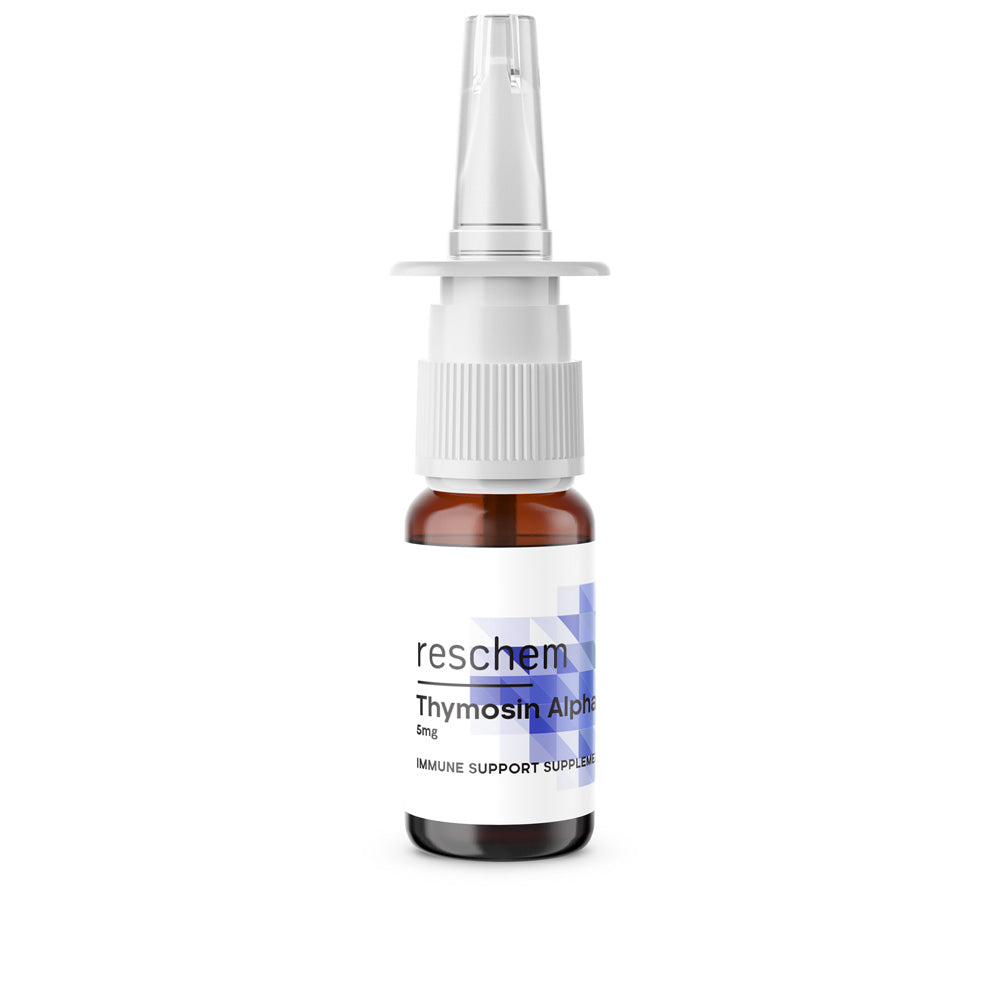
Thymosin Alpha-1 Peptide
Thymosin Alpha-1 is a 28-amino acid thymic peptide that modulates innate and adaptive immunity by enhancing T-cell maturation, dendritic cell function, and balanced cytokine production. It is studied for its potential to support immune resilience, antiviral defense, and recovery in protocols focused on immunomodulation and healthy inflammatory responses.
Couldn't load pickup availability
Share

What is Thymosin Alpha-1?
Thymosin Alpha-1 (Tα1) is a naturally occurring 28-amino-acid peptide originally derived from thymic tissue and subsequently produced synthetically. Unlike peptides that primarily target growth, metabolism or tissue repair, Tα1 is distinguished by its immunomodulatory activity—helping regulate how innate and adaptive immune cells recognize and respond to biological challenges. Research has demonstrated effects on T-cell function, dendritic-cell maturation, natural killer-cell activity and immune signaling, including pathways involving Toll-like receptors and cytokine networks. This has made Tα1 one of the most extensively investigated immune-modulating peptides, with human studies spanning infectious disease, vaccine response, immune dysfunction and oncology.
What makes Thymosin Alpha-1 unique?
What makes Thymosin Alpha-1 particularly interesting is that its proposed role is not simply to “boost” immunity, but to help restore or coordinate an appropriate immune response. Experimental research suggests that Tα1 can enhance aspects of immune surveillance while simultaneously influencing excessive inflammatory signaling, making it relevant to research into both immune deficiency and dysregulated inflammation. Clinical studies have demonstrated enhanced vaccine antibody responses in older adults, while numerous trials have investigated its use alongside conventional treatment in infectious and immune-related conditions. Evidence is encouraging in several areas, but results are not uniformly positive; notably, a large multicentre phase 3 randomized trial in sepsis found no significant reduction in 28-day mortality.
Key benefits:
- Immune Modulation – Investigated for its ability to regulate rather than simply stimulate immune-system activity.
- T-Cell Function – Research indicates effects on T-cell activation, differentiation and functional immune responses.
- Dendritic-Cell Support – Investigated for enhancing dendritic-cell maturation and antigen-presenting activity.
- Natural Killer (NK) Cell Activity – Research suggests modulation of NK-cell function, an important component of innate immune surveillance.
- Immune Surveillance – Studied for its potential to improve recognition and coordinated responses to pathogens and abnormal cells.
- Toll-Like Receptor Signaling – Tα1 interacts with innate immune signaling pathways, including TLR-related mechanisms involved in pathogen recognition.
- Cytokine Regulation – Experimental research indicates effects on cytokine networks and the balance between inflammatory and regulatory immune responses.
- Vaccine-Response Research – Human clinical research has demonstrated enhanced antibody responses to influenza vaccination in elderly subjects receiving Tα1 alongside vaccination.
- Infectious-Disease Research – Extensively investigated as an adjunctive immunomodulator in viral and other infectious diseases.
- Immune Dysfunction Research – Particularly relevant to conditions characterized by impaired or dysregulated immune responses.
- Sepsis Research – Numerous randomized trials and meta-analyses have investigated Tα1 in sepsis, with some evidence of improved immune markers; however, the large TESTS phase 3 trial did not demonstrate a mortality benefit.
- Inflammation Research – Investigated for its ability to influence excessive or poorly regulated inflammatory responses rather than indiscriminately suppressing immunity.
- Oncology Research – Studied as an adjunct to conventional cancer therapies because of its potential effects on immune surveillance and host immune function.
- Immune Recovery Research – Investigated in settings where immune competence may be compromised, including severe illness and certain chronic infections.
- Healthy-Aging Research – Of interest because immune function and T-cell responsiveness change substantially with age, making immune-modulating approaches an important area of geroscience research.
- Well-Characterized Peptide – Compared with many newer experimental peptides, Tα1 has an unusually extensive history of human clinical investigation.
What is Thymosin Alpha-1?
Thymosin Alpha-1 (Tα1) is a naturally occurring 28-amino-acid peptide originally derived from thymic tissue and subsequently produced synthetically. Unlike peptides that primarily target growth, metabolism or tissue repair, Tα1 is distinguished by its immunomodulatory activity—helping regulate how innate and adaptive immune cells recognize and respond to biological challenges. Research has demonstrated effects on T-cell function, dendritic-cell maturation, natural killer-cell activity and immune signaling, including pathways involving Toll-like receptors and cytokine networks. This has made Tα1 one of the most extensively investigated immune-modulating peptides, with human studies spanning infectious disease, vaccine response, immune dysfunction and oncology.
What makes Thymosin Alpha-1 unique?
What makes Thymosin Alpha-1 particularly interesting is that its proposed role is not simply to “boost” immunity, but to help restore or coordinate an appropriate immune response. Experimental research suggests that Tα1 can enhance aspects of immune surveillance while simultaneously influencing excessive inflammatory signaling, making it relevant to research into both immune deficiency and dysregulated inflammation. Clinical studies have demonstrated enhanced vaccine antibody responses in older adults, while numerous trials have investigated its use alongside conventional treatment in infectious and immune-related conditions. Evidence is encouraging in several areas, but results are not uniformly positive; notably, a large multicentre phase 3 randomized trial in sepsis found no significant reduction in 28-day mortality.
Key benefits:
- Immune Modulation – Investigated for its ability to regulate rather than simply stimulate immune-system activity.
- T-Cell Function – Research indicates effects on T-cell activation, differentiation and functional immune responses.
- Dendritic-Cell Support – Investigated for enhancing dendritic-cell maturation and antigen-presenting activity.
- Natural Killer (NK) Cell Activity – Research suggests modulation of NK-cell function, an important component of innate immune surveillance.
- Immune Surveillance – Studied for its potential to improve recognition and coordinated responses to pathogens and abnormal cells.
- Toll-Like Receptor Signaling – Tα1 interacts with innate immune signaling pathways, including TLR-related mechanisms involved in pathogen recognition.
- Cytokine Regulation – Experimental research indicates effects on cytokine networks and the balance between inflammatory and regulatory immune responses.
- Vaccine-Response Research – Human clinical research has demonstrated enhanced antibody responses to influenza vaccination in elderly subjects receiving Tα1 alongside vaccination.
- Infectious-Disease Research – Extensively investigated as an adjunctive immunomodulator in viral and other infectious diseases.
- Immune Dysfunction Research – Particularly relevant to conditions characterized by impaired or dysregulated immune responses.
- Sepsis Research – Numerous randomized trials and meta-analyses have investigated Tα1 in sepsis, with some evidence of improved immune markers; however, the large TESTS phase 3 trial did not demonstrate a mortality benefit.
- Inflammation Research – Investigated for its ability to influence excessive or poorly regulated inflammatory responses rather than indiscriminately suppressing immunity.
- Oncology Research – Studied as an adjunct to conventional cancer therapies because of its potential effects on immune surveillance and host immune function.
- Immune Recovery Research – Investigated in settings where immune competence may be compromised, including severe illness and certain chronic infections.
- Healthy-Aging Research – Of interest because immune function and T-cell responsiveness change substantially with age, making immune-modulating approaches an important area of geroscience research.
- Well-Characterized Peptide – Compared with many newer experimental peptides, Tα1 has an unusually extensive history of human clinical investigation.
Pre-Filled Pen
Composition: Each pen contains 5mg Thymosin Alpha-1. Other ingredients - bacteriostatic water.
Directions: Inject subcutaneously once per day in the morning.
Low dose: 0.25 mg = 13 clicks (lasts 23 days)
Moderate dose: 0.5 mg = 22 clicks (lasts 14 days)
High dose: 0.75 mg = 37 clicks (lasts 8 days)
Hygiene: Use a new needle daily. Each pen comes with 10 needles, additional needles can be purchased here.
Storage: Keep refrigerated, use within 30 days.
Nasal Spray
Directions: Take four sprays (two in each nostril or under the tongue) per day in the morning (lasts 12 days).
Storage: Keep refrigerated. Minimize exposure to heat, light and air.
Mixing Instructions:
1) Assemble the syringe and needle; draw up and inject 2ml of sterile saline solution (provided) into the peptide vial (by popping off the plastic cap and injecting the water via the rubber stopper) then allow the powder to dissolve (do not shake).
2) You can gently swirl the peptide vial if needed to make sure that all the powder has dissolved and then draw out all the liquid from the vial with the syringe and inject it into the amber nasal spray bottle (You can turn the vial upside down if needed to get all the liquid out).
3) Add an additional 4ml of sterile saline solution (provided) into the amber nasal spray bottle and tighten the white nasal atomizer. It is now ready to be administered as per dosage directions and stored in the fridge to prevent degradation.
Pre-Filled Pen
Composition: Each pen contains 5mg Thymosin Alpha-1. Other ingredients - bacteriostatic water.
Directions: Inject subcutaneously once per day in the morning.
Low dose: 0.25 mg = 13 clicks (lasts 23 days)
Moderate dose: 0.5 mg = 22 clicks (lasts 14 days)
High dose: 0.75 mg = 37 clicks (lasts 8 days)
Hygiene: Use a new needle daily. Each pen comes with 10 needles, additional needles can be purchased here.
Storage: Keep refrigerated, use within 30 days.
Nasal Spray
Directions: Take four sprays (two in each nostril or under the tongue) per day in the morning (lasts 12 days).
Storage: Keep refrigerated. Minimize exposure to heat, light and air.
Mixing Instructions:
1) Assemble the syringe and needle; draw up and inject 2ml of sterile saline solution (provided) into the peptide vial (by popping off the plastic cap and injecting the water via the rubber stopper) then allow the powder to dissolve (do not shake).
2) You can gently swirl the peptide vial if needed to make sure that all the powder has dissolved and then draw out all the liquid from the vial with the syringe and inject it into the amber nasal spray bottle (You can turn the vial upside down if needed to get all the liquid out).
3) Add an additional 4ml of sterile saline solution (provided) into the amber nasal spray bottle and tighten the white nasal atomizer. It is now ready to be administered as per dosage directions and stored in the fridge to prevent degradation.
At the core of our mission is an unwavering commitment to your health and trust: we employ a rigorous, multi-phase quality control system - backed by accredited certifications and total transparency - to ensure every product we stock is pure, safe, and consistently meets the highest industry standards. From material sourcing through final batch testing, our processes are continually refined to guarantee potency and prevent cross-contamination.