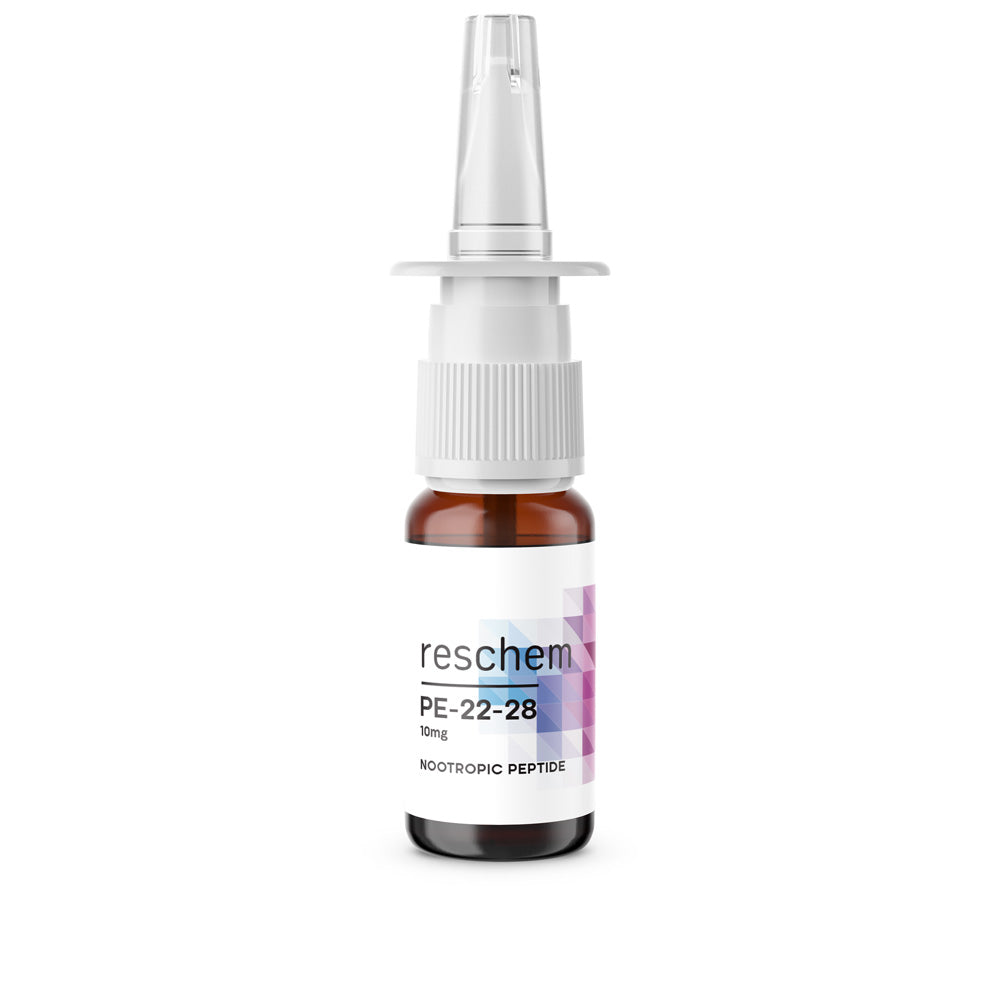
PE-22-28 Peptide
PE-22-28 Peptide
PE-22-28 is a synthetic peptide studied in preclinical research for its ability to inhibit TREK-1 potassium channels and influence neuronal excitability and neuroplasticity. Early studies are exploring its potential relevance to mood regulation and cognitive function.
Couldn't load pickup availability
Share

What is PE-22-28?
PE-22-28 is a synthetic seven-amino-acid peptide developed as a shortened and optimized analogue of spadin, a naturally occurring peptide fragment associated with the sortilin (NTSR3) system. What makes PE-22-28 particularly intriguing is its highly selective interaction with TREK-1 (KCNK2), a two-pore-domain potassium channel involved in regulating neuronal excitability. In laboratory studies, PE-22-28 demonstrated substantially greater affinity for TREK-1 than spadin, with an IC₅₀ of approximately 0.12 nM compared with 40–60 nM for spadin. This unusual mechanism has made PE-22-28 a subject of research into mood regulation, neuronal plasticity and neuroprotection.
What makes PE-22-28 unique?
Blocking TREK-1 appears to increase neuronal excitability and influence serotonergic signaling, while downstream research has identified effects associated with hippocampal neurogenesis and synaptogenesis. In animal studies, PE-22-28 produced antidepressant-like behavioral effects after relatively short treatment periods and increased markers associated with new neuronal growth and synaptic connectivity. The peptide was also designed to improve upon the short duration of action of spadin, with experimental studies reporting activity lasting substantially longer. These findings make PE-22-28 particularly interesting for research into rapid-acting neuroplasticity, but all direct evidence remains preclinical and its efficacy, pharmacokinetics and safety in humans have not been established.
Key benefits:
- TREK-1 Modulation – Potently and selectively inhibits the TREK-1 potassium channel, a novel target in neuroscience research.
- Rapid Antidepressant-Like Effects – Produced antidepressant-like behavioral effects in several rodent models following relatively short treatment periods.
- Neurogenesis Research – Experimental treatment increased hippocampal neurogenesis in animal models.
- Synaptogenesis – Increased markers of synaptic formation, including PSD-95 expression, in experimental neuronal models.
- Neuroplasticity – Investigated for its ability to promote structural and functional adaptations within neuronal networks.
- Serotonergic Signaling – TREK-1 blockade has been associated with increased serotonergic neuronal activity in experimental models.
- BDNF-Related – The TREK-1 pathway is linked to downstream neurotrophic and plasticity-related signaling, including BDNF-associated mechanisms.
- Neuronal Resilience – Investigated for potential neuroprotective effects under experimental conditions.
- Cognitive Research – Neurogenesis and synaptic-plasticity effects provide a rationale for investigating PE-22-28 in learning and memory models.
- Stress-Resilience – TREK-1 signaling has been investigated in relation to the neuronal response to chronic stress.
- Novel Antidepressant Mechanism – Provides a research model for investigating antidepressant activity through potassium-channel modulation rather than conventional monoamine reuptake inhibition.
- High TREK-1 Affinity – Experimental studies reported an IC₅₀ of approximately 0.12 nM, substantially lower than that reported for parent compound spadin.
- Extended Experimental Activity – PE-22-28 and related analogues demonstrated substantially longer activity than spadin in experimental models, with activity reported for up to approximately 23 hours versus about 7 hours for spadin.
- Experimental Neuroregeneration – The combination of neurogenesis and synaptogenesis makes PE-22-28 an interesting candidate for research into neuronal repair and remodeling.
- Next-Generation Spadin Analogue – Its shortened structure was specifically developed to improve the pharmacological characteristics of the parent spadin peptide.
What is PE-22-28?
PE-22-28 is a synthetic seven-amino-acid peptide developed as a shortened and optimized analogue of spadin, a naturally occurring peptide fragment associated with the sortilin (NTSR3) system. What makes PE-22-28 particularly intriguing is its highly selective interaction with TREK-1 (KCNK2), a two-pore-domain potassium channel involved in regulating neuronal excitability. In laboratory studies, PE-22-28 demonstrated substantially greater affinity for TREK-1 than spadin, with an IC₅₀ of approximately 0.12 nM compared with 40–60 nM for spadin. This unusual mechanism has made PE-22-28 a subject of research into mood regulation, neuronal plasticity and neuroprotection.
What makes PE-22-28 unique?
Blocking TREK-1 appears to increase neuronal excitability and influence serotonergic signaling, while downstream research has identified effects associated with hippocampal neurogenesis and synaptogenesis. In animal studies, PE-22-28 produced antidepressant-like behavioral effects after relatively short treatment periods and increased markers associated with new neuronal growth and synaptic connectivity. The peptide was also designed to improve upon the short duration of action of spadin, with experimental studies reporting activity lasting substantially longer. These findings make PE-22-28 particularly interesting for research into rapid-acting neuroplasticity, but all direct evidence remains preclinical and its efficacy, pharmacokinetics and safety in humans have not been established.
Key benefits:
- TREK-1 Modulation – Potently and selectively inhibits the TREK-1 potassium channel, a novel target in neuroscience research.
- Rapid Antidepressant-Like Effects – Produced antidepressant-like behavioral effects in several rodent models following relatively short treatment periods.
- Neurogenesis Research – Experimental treatment increased hippocampal neurogenesis in animal models.
- Synaptogenesis – Increased markers of synaptic formation, including PSD-95 expression, in experimental neuronal models.
- Neuroplasticity – Investigated for its ability to promote structural and functional adaptations within neuronal networks.
- Serotonergic Signaling – TREK-1 blockade has been associated with increased serotonergic neuronal activity in experimental models.
- BDNF-Related – The TREK-1 pathway is linked to downstream neurotrophic and plasticity-related signaling, including BDNF-associated mechanisms.
- Neuronal Resilience – Investigated for potential neuroprotective effects under experimental conditions.
- Cognitive Research – Neurogenesis and synaptic-plasticity effects provide a rationale for investigating PE-22-28 in learning and memory models.
- Stress-Resilience – TREK-1 signaling has been investigated in relation to the neuronal response to chronic stress.
- Novel Antidepressant Mechanism – Provides a research model for investigating antidepressant activity through potassium-channel modulation rather than conventional monoamine reuptake inhibition.
- High TREK-1 Affinity – Experimental studies reported an IC₅₀ of approximately 0.12 nM, substantially lower than that reported for parent compound spadin.
- Extended Experimental Activity – PE-22-28 and related analogues demonstrated substantially longer activity than spadin in experimental models, with activity reported for up to approximately 23 hours versus about 7 hours for spadin.
- Experimental Neuroregeneration – The combination of neurogenesis and synaptogenesis makes PE-22-28 an interesting candidate for research into neuronal repair and remodeling.
- Next-Generation Spadin Analogue – Its shortened structure was specifically developed to improve the pharmacological characteristics of the parent spadin peptide.
Pre-Filled Pen
Composition: Each pen contains 10mg PE-22-28. Other ingredients - bacteriostatic water.
Directions: Inject subcutaneously once per day in the morning.
10mg Pre-Filled Pen (SubQ)
Low dose: 0.2 mg = 6 clicks (lasts 50 days)
Moderate dose: 0.3 mg = 9 clicks (lasts 33 days)
High dose: 0.4 mg = 12 clicks (lasts 25 days)
Hygiene: Use a new needle daily. Each pen comes with 10 needles, additional needles can be purchased here.
Storage: Keep refrigerated, use within 30 days.
Nasal Spray
Directions: Take four sprays (two in each nostril or under the tongue) per day in the morning (lasts 12 days).
Storage: Keep refrigerated. Minimize exposure to heat, light and air.
Mixing Instructions:
1) Assemble the syringe and needle; draw up and inject 2ml of sterile saline solution (provided) into the peptide vial (by popping off the plastic cap and injecting the water via the rubber stopper) then allow the powder to dissolve (do not shake).
2) You can gently swirl the peptide vial if needed to make sure that all the powder has dissolved and then draw out all the liquid from the vial with the syringe and inject it into the amber nasal spray bottle (You can turn the vial upside down if needed to get all the liquid out).
3) Add an additional 4ml of sterile saline solution (provided) into the amber nasal spray bottle and tighten the white nasal atomizer. It is now ready to be administered as per dosage directions and stored in the fridge to prevent degradation.
Pre-Filled Pen
Composition: Each pen contains 10mg PE-22-28. Other ingredients - bacteriostatic water.
Directions: Inject subcutaneously once per day in the morning.
10mg Pre-Filled Pen (SubQ)
Low dose: 0.2 mg = 6 clicks (lasts 50 days)
Moderate dose: 0.3 mg = 9 clicks (lasts 33 days)
High dose: 0.4 mg = 12 clicks (lasts 25 days)
Hygiene: Use a new needle daily. Each pen comes with 10 needles, additional needles can be purchased here.
Storage: Keep refrigerated, use within 30 days.
Nasal Spray
Directions: Take four sprays (two in each nostril or under the tongue) per day in the morning (lasts 12 days).
Storage: Keep refrigerated. Minimize exposure to heat, light and air.
Mixing Instructions:
1) Assemble the syringe and needle; draw up and inject 2ml of sterile saline solution (provided) into the peptide vial (by popping off the plastic cap and injecting the water via the rubber stopper) then allow the powder to dissolve (do not shake).
2) You can gently swirl the peptide vial if needed to make sure that all the powder has dissolved and then draw out all the liquid from the vial with the syringe and inject it into the amber nasal spray bottle (You can turn the vial upside down if needed to get all the liquid out).
3) Add an additional 4ml of sterile saline solution (provided) into the amber nasal spray bottle and tighten the white nasal atomizer. It is now ready to be administered as per dosage directions and stored in the fridge to prevent degradation.
At the core of our mission is an unwavering commitment to your health and trust: we employ a rigorous, multi-phase quality control system - backed by accredited certifications and total transparency - to ensure every product we stock is pure, safe, and consistently meets the highest industry standards. From material sourcing through final batch testing, our processes are continually refined to guarantee potency and prevent cross-contamination.