GHK-Cu Peptide
GHK-Cu Peptide
GHK-Cu is a naturally occurring copper-binding tripeptide (glycyl-L-histidyl-L-lysine) studied for its role in extracellular matrix remodeling, collagen synthesis, and tissue regeneration. It supports wound healing, angiogenesis, and anti-inflammatory signaling, making it a leading candidate for research into skin renewal, anti-aging, and regenerative medicine.
Couldn't load pickup availability
Share

What is GHK-Cu?
GHK-Cu (Copper Tripeptide) is a naturally occurring complex of the three-amino-acid peptide glycyl-L-histidyl-L-lysine (GHK) bound to copper (Cu²⁺). Originally identified in human plasma, GHK-Cu is particularly interesting because it appears to function as a biological repair signal rather than simply supplying copper. Research has shown that GHK-Cu can influence fibroblast activity, collagen and elastin production, glycosaminoglycan synthesis, angiogenesis and extracellular-matrix remodeling. Intriguingly, circulating GHK levels decline substantially with age, which has helped make the peptide a subject of interest in skin regeneration and longevity research.
What makes GHK-Cu unique?
What makes GHK-Cu especially distinctive is its broad influence on the cellular environment surrounding tissue repair. Rather than targeting one isolated pathway, research suggests that it can modulate numerous genes and signaling pathways involved in inflammation, oxidative stress, tissue remodeling and regeneration. Studies have reported enhanced collagen synthesis, support for dermal fibroblasts, improved wound-healing responses and stimulation of blood-vessel and nerve outgrowth. GHK-Cu has therefore attracted considerable research interest in skin regeneration, connective-tissue repair, wound healing, hair biology and healthy aging. While the biological evidence is extensive, many of the more ambitious systemic claims remain preclinical and require further controlled human research.
Key benefits:
- Collagen Production – Stimulates synthesis of collagen and other extracellular-matrix components important for tissue structure and skin integrity.
- Skin Regeneration – Investigated for supporting dermal repair, skin remodeling, firmness and elasticity.
- Wound-Healing Research – Preclinical studies have demonstrated accelerated repair responses in several tissue models.
- Fibroblast Support – Promotes the activity and function of fibroblasts, the cells responsible for producing much of the skin's structural matrix.
- Elastin & Glycosaminoglycan Synthesis – Research indicates increased production of elastin and glycosaminoglycans, helping support the extracellular matrix.
- Angiogenesis Support – Investigated for stimulating blood-vessel formation and endothelial-cell activity during tissue repair.
- Anti-Inflammatory Activity – Experimental studies indicate modulation of inflammatory pathways and molecules associated with chronic inflammation.
- Antioxidant & Cellular Protection – Research suggests protective effects against oxidative and cellular stress.
- Skin Barrier Support – Investigated for restoring structural proteins and improving the resilience of aging or damaged skin.
- Reduced Appearance of Skin Aging – Cosmetic and experimental research has reported improvements in firmness, elasticity, fine lines, wrinkles and photodamage.
- Hair & Follicle Research – Experimental evidence suggests effects on hair follicles, including increased follicular size and hair growth in certain models.
- Tissue Remodeling – May help regulate the balance between extracellular-matrix synthesis and breakdown through effects on matrix metalloproteinases and their inhibitors.
- Regenerative-Medicine Research – Investigated beyond the skin, including connective tissue, bone, gastrointestinal tissue and other models of tissue injury.
- Healthy-Aging Research – The age-related decline in circulating GHK-Cu and its broad effects on tissue-repair pathways have made it an intriguing candidate for further longevity research.
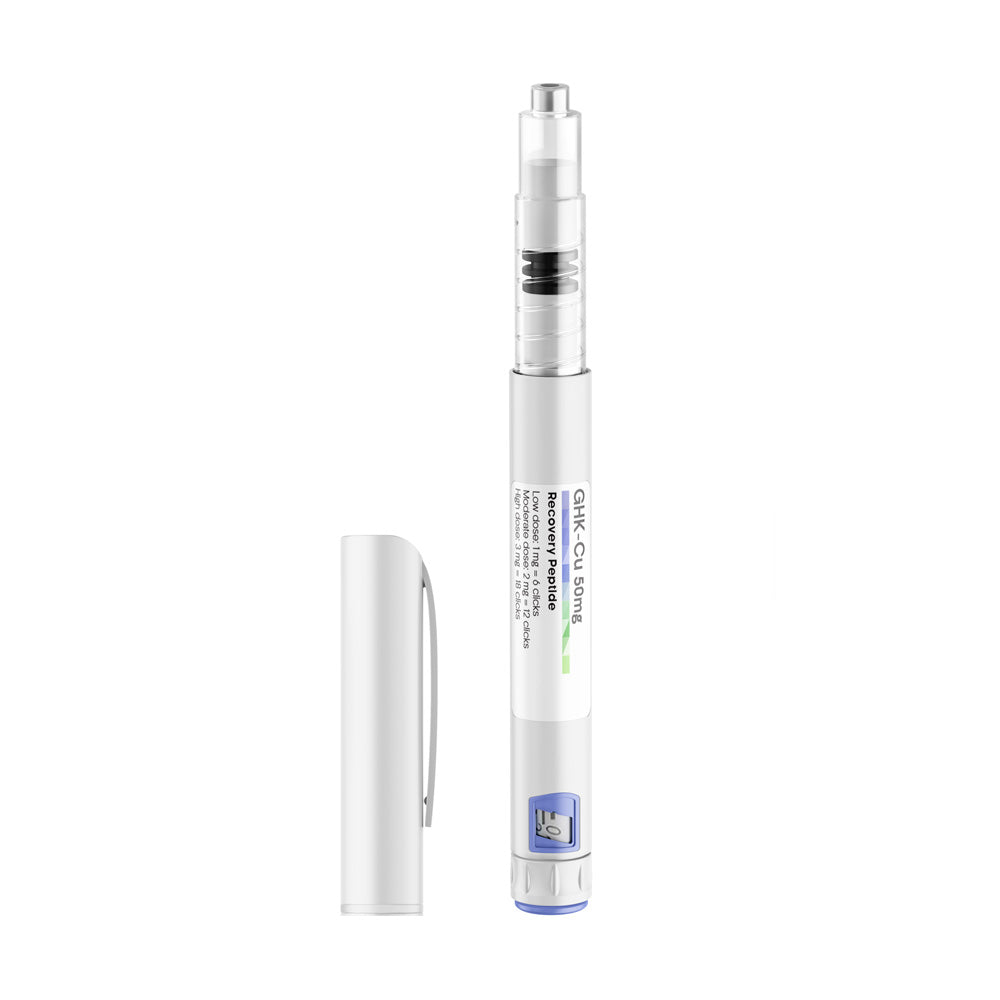
Pre-Filled Pen
Composition: Each pen contains 50mg GHK-Cu peptide. Other ingredients - bacteriostatic water.
Directions: Inject subcutaneously once per day in the morning.
50mg Pre-Filled Pen (SubQ):
Low dose: 1 mg = 6 clicks (lasts 50 days)
Moderate dose: 2 mg = 12 clicks (lasts 25 days)
High dose: 3 mg = 18 clicks (lasts 17 days)
Hygiene: Use a new needle daily. Each pen comes with 10 needles, additional needles can be purchased here.
Storage: Keep refrigerated, use within 30 days.
GHK-Cu
- CAS: 49557-75-7
- Molar Mass: 340.5 g/mol
- Chemical Formula: C14H24CuN6O4
- Synonyms: glycyl-L-histidyl-L-lysine copper
GHK-Cu
- CAS: 49557-75-7
- Molar Mass: 340.5 g/mol
- Chemical Formula: C14H24CuN6O4
- Synonyms: glycyl-L-histidyl-L-lysine copper
At the core of our mission is an unwavering commitment to your health and trust: we employ a rigorous, multi-phase quality control system - backed by accredited certifications and total transparency - to ensure every product we stock is pure, safe, and consistently meets the highest industry standards. From material sourcing through final batch testing, our processes are continually refined to guarantee potency and prevent cross-contamination.