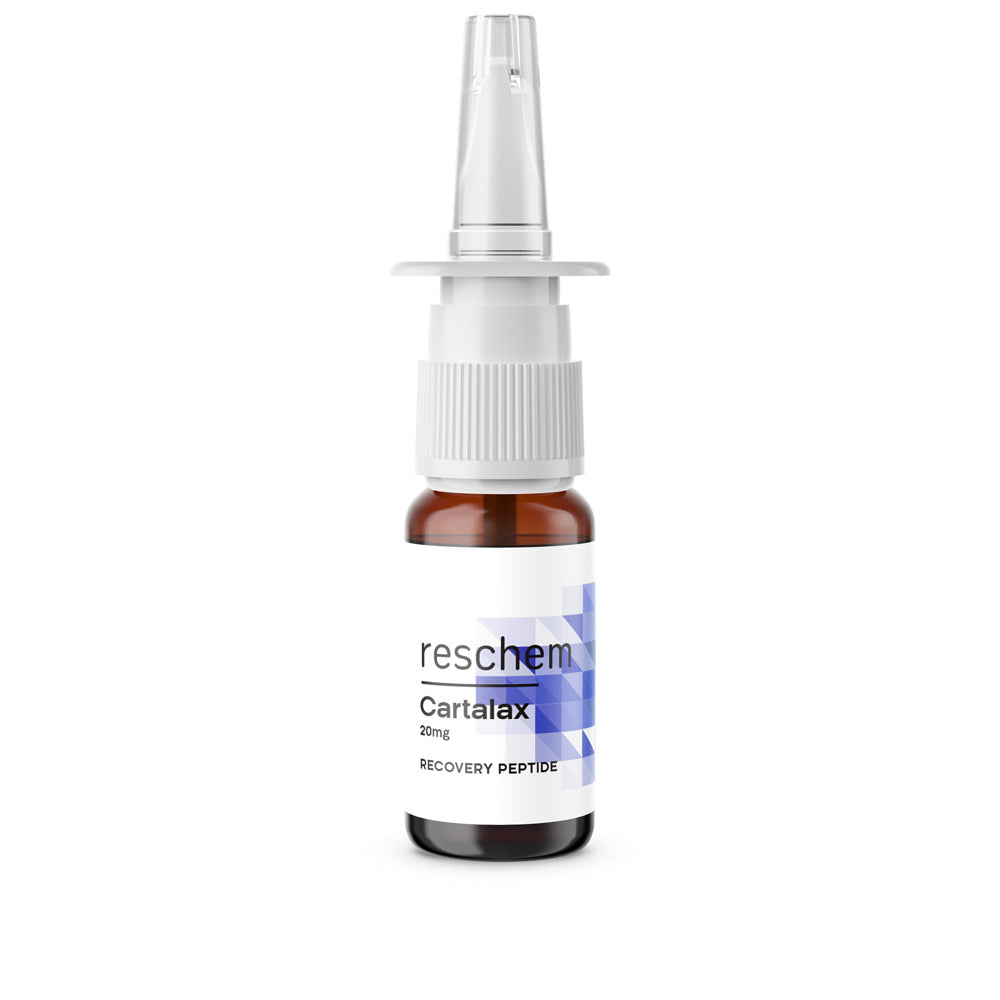
Cartalax Peptide
Cartalax Peptide
Cartalax is a synthetic tripeptide bioregulator (Ala-Glu-Asp) designed to support cartilage and connective tissue health by modulating gene expression in chondrocytes and promoting extracellular matrix synthesis. It is studied for its potential to enhance collagen production, reduce inflammatory signaling, and support joint function in aging and degenerative tissue models.
Couldn't load pickup availability
Share

What is Cartalax?
Cartalax is a short synthetic peptide bioregulator associated with the research of Vladimir Khavinson and the Russian school of tissue-specific peptide research. It has been investigated primarily in relation to cartilage, chondrocytes and connective-tissue homeostasis, making it particularly interesting among experimental peptides because of its proposed tissue-oriented activity. Research has examined its influence on cartilage-cell function and gene-expression patterns involved in maintaining healthy cartilage, rather than simply providing general systemic stimulation. This has positioned Cartalax as an intriguing compound for research into cartilage aging, joint degeneration and tissue regeneration.
What makes Cartalax unique?
The proposed mechanism of Cartalax centers on modulation of cellular gene expression and restoration of more youthful patterns of cellular activity in cartilage-related tissues. Experimental research has reported effects on chondrocyte function and cartilage maintenance, while broader research into short peptide bioregulators suggests that these very small peptides may interact with intracellular regulatory processes. Importantly, however, the Cartalax evidence base remains early-stage and predominantly preclinical, with limited independent replication and no established body of high-quality human clinical trials. Its greatest scientific interest therefore lies in its potential as a cartilage-focused research compound, rather than as a proven treatment for joint disease.
Key benefits:
- Cartilage Research – Investigated for its potential role in maintaining and supporting cartilage tissue.
- Chondrocyte Support – Experimental research has examined effects on chondrocyte activity and gene expression.
- Cartilage Maintenance – Studied for its potential to influence cellular processes involved in maintaining cartilage structure.
- Connective-Tissue Research – Relevant to experimental investigation of cartilage and broader connective-tissue biology.
- Gene-Expression Modulation – Proposed to influence expression of genes involved in tissue-specific cellular function.
- Cartilage Aging Research – Investigated in models examining age-associated changes in cartilage and chondrocyte function.
- Joint Degeneration Research – Preclinical studies have explored Cartalax in the context of cartilage degeneration and age-related joint changes.
- Extracellular-Matrix Research – Of interest for investigating cellular regulation of the structural matrix surrounding cartilage cells.
- Cellular Repair & Regeneration Research – Provides a model for studying whether short regulatory peptides can influence tissue-maintenance and repair pathways.
- Tissue-Specific Bioregulator Research – Particularly interesting as part of the Khavinson peptide-bioregulator approach, which proposes that short peptides can influence the functional state of specific tissues.
- Healthy-Aging Research – Cartalax is being explored within the broader field of age-related tissue deterioration and cellular regulation.
- Ultra-Short Peptide Structure – Its extremely small molecular structure distinguishes it from larger therapeutic peptides and proteins and makes it useful for investigating alternative mechanisms of peptide-mediated cellular regulation.
- Regenerative-Medicine Research – Its cartilage-oriented activity makes it an interesting candidate for experimental research into tissue preservation, regeneration and age-related degeneration.
What is Cartalax?
Cartalax is a short synthetic peptide bioregulator associated with the research of Vladimir Khavinson and the Russian school of tissue-specific peptide research. It has been investigated primarily in relation to cartilage, chondrocytes and connective-tissue homeostasis, making it particularly interesting among experimental peptides because of its proposed tissue-oriented activity. Research has examined its influence on cartilage-cell function and gene-expression patterns involved in maintaining healthy cartilage, rather than simply providing general systemic stimulation. This has positioned Cartalax as an intriguing compound for research into cartilage aging, joint degeneration and tissue regeneration.
What makes Cartalax unique?
The proposed mechanism of Cartalax centers on modulation of cellular gene expression and restoration of more youthful patterns of cellular activity in cartilage-related tissues. Experimental research has reported effects on chondrocyte function and cartilage maintenance, while broader research into short peptide bioregulators suggests that these very small peptides may interact with intracellular regulatory processes. Importantly, however, the Cartalax evidence base remains early-stage and predominantly preclinical, with limited independent replication and no established body of high-quality human clinical trials. Its greatest scientific interest therefore lies in its potential as a cartilage-focused research compound, rather than as a proven treatment for joint disease.
Key benefits:
- Cartilage Research – Investigated for its potential role in maintaining and supporting cartilage tissue.
- Chondrocyte Support – Experimental research has examined effects on chondrocyte activity and gene expression.
- Cartilage Maintenance – Studied for its potential to influence cellular processes involved in maintaining cartilage structure.
- Connective-Tissue Research – Relevant to experimental investigation of cartilage and broader connective-tissue biology.
- Gene-Expression Modulation – Proposed to influence expression of genes involved in tissue-specific cellular function.
- Cartilage Aging Research – Investigated in models examining age-associated changes in cartilage and chondrocyte function.
- Joint Degeneration Research – Preclinical studies have explored Cartalax in the context of cartilage degeneration and age-related joint changes.
- Extracellular-Matrix Research – Of interest for investigating cellular regulation of the structural matrix surrounding cartilage cells.
- Cellular Repair & Regeneration Research – Provides a model for studying whether short regulatory peptides can influence tissue-maintenance and repair pathways.
- Tissue-Specific Bioregulator Research – Particularly interesting as part of the Khavinson peptide-bioregulator approach, which proposes that short peptides can influence the functional state of specific tissues.
- Healthy-Aging Research – Cartalax is being explored within the broader field of age-related tissue deterioration and cellular regulation.
- Ultra-Short Peptide Structure – Its extremely small molecular structure distinguishes it from larger therapeutic peptides and proteins and makes it useful for investigating alternative mechanisms of peptide-mediated cellular regulation.
- Regenerative-Medicine Research – Its cartilage-oriented activity makes it an interesting candidate for experimental research into tissue preservation, regeneration and age-related degeneration.
Pre-Filled Pen
Composition: Each pen contains 20mg Cartalax. Other ingredients - bacteriostatic water.
Directions: Inject subcutaneously once per day in the morning.
Low dose: 0.5 mg = 8 clicks (lasts 38 days)
Moderate dose: 1 mg = 15 clicks (lasts 20 days)
High dose: 1.5 mg = 23 clicks (lasts 13 days)
Hygiene: Use a new needle daily. Each pen comes with 10 needles, additional needles can be purchased here.
Storage: Keep refrigerated, use within 30 days.
Nasal Spray
Directions: Take four sprays (two in each nostril or under the tongue) per day in the morning (lasts 12 days).
Storage: Keep refrigerated. Minimize exposure to heat, light and air.
Mixing Instructions:
1) Assemble the syringe and needle; draw up and inject 2ml of sterile saline solution (provided) into the peptide vial (by popping off the plastic cap and injecting the water via the rubber stopper) then allow the powder to dissolve (do not shake).
2) You can gently swirl the peptide vial if needed to make sure that all the powder has dissolved and then draw out all the liquid from the vial with the syringe and inject it into the amber nasal spray bottle (You can turn the vial upside down if needed to get all the liquid out).
3) Add an additional 4ml of sterile saline solution (provided) into the amber nasal spray bottle and tighten the white nasal atomizer. It is now ready to be administered as per dosage directions and stored in the fridge to prevent degradation.
Pre-Filled Pen
Composition: Each pen contains 20mg Cartalax. Other ingredients - bacteriostatic water.
Directions: Inject subcutaneously once per day in the morning.
Low dose: 0.5 mg = 8 clicks (lasts 38 days)
Moderate dose: 1 mg = 15 clicks (lasts 20 days)
High dose: 1.5 mg = 23 clicks (lasts 13 days)
Hygiene: Use a new needle daily. Each pen comes with 10 needles, additional needles can be purchased here.
Storage: Keep refrigerated, use within 30 days.
Nasal Spray
Directions: Take four sprays (two in each nostril or under the tongue) per day in the morning (lasts 12 days).
Storage: Keep refrigerated. Minimize exposure to heat, light and air.
Mixing Instructions:
1) Assemble the syringe and needle; draw up and inject 2ml of sterile saline solution (provided) into the peptide vial (by popping off the plastic cap and injecting the water via the rubber stopper) then allow the powder to dissolve (do not shake).
2) You can gently swirl the peptide vial if needed to make sure that all the powder has dissolved and then draw out all the liquid from the vial with the syringe and inject it into the amber nasal spray bottle (You can turn the vial upside down if needed to get all the liquid out).
3) Add an additional 4ml of sterile saline solution (provided) into the amber nasal spray bottle and tighten the white nasal atomizer. It is now ready to be administered as per dosage directions and stored in the fridge to prevent degradation.
At the core of our mission is an unwavering commitment to your health and trust: we employ a rigorous, multi-phase quality control system - backed by accredited certifications and total transparency - to ensure every product we stock is pure, safe, and consistently meets the highest industry standards. From material sourcing through final batch testing, our processes are continually refined to guarantee potency and prevent cross-contamination.